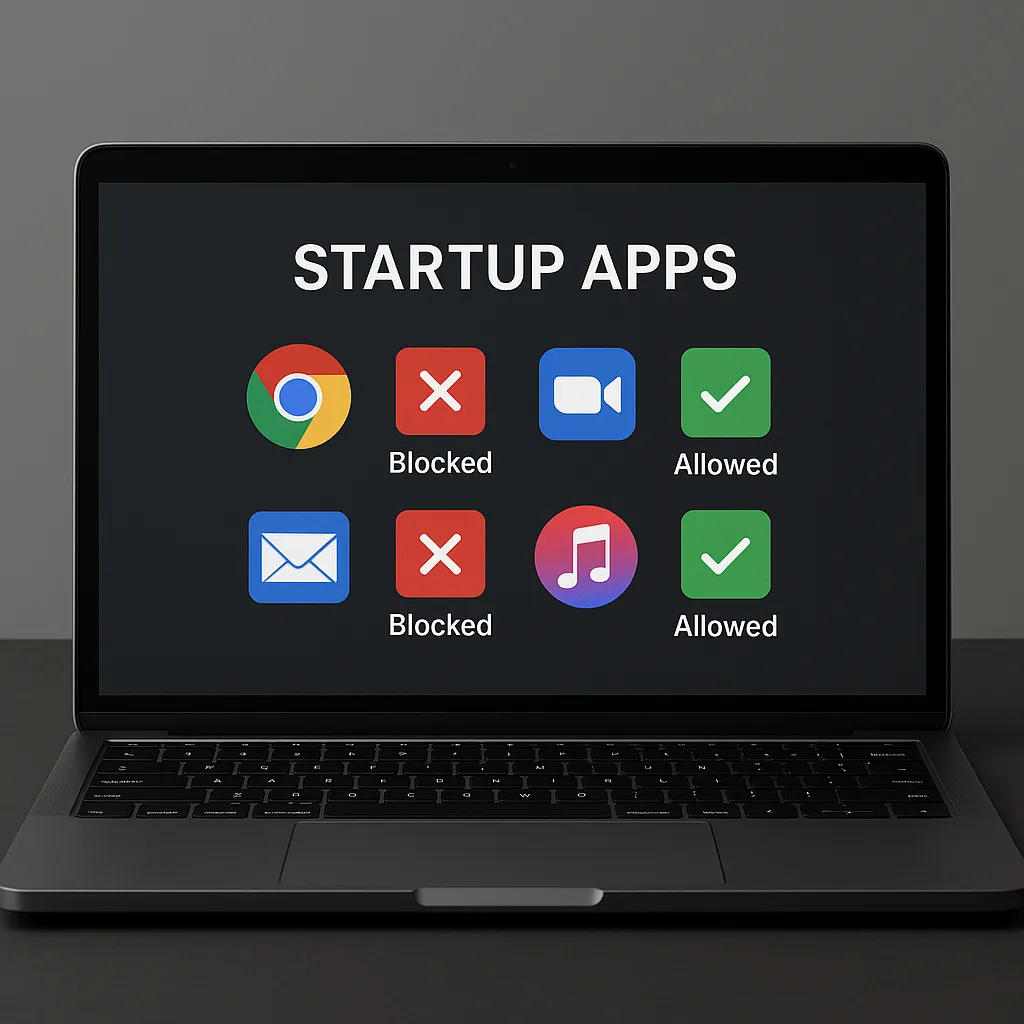
With recent data leaks in mind, all users should look to their own digital security and take note of some important, yet easy-to-implement, solutions to protect their data. Obviously, one of the most daring ways of taking control of your data is to build your own homelab (just check out all the services you can run at home), but that is unfortunately not an option for some users. As such, today we will look at a firmware feature that checks trust in startup software. It does not prevent ordinary malware from running after the operating system has started. You might have seen it mentioned in your computer's settings or read about it online, but what exactly is Secure Boot, and why should you care? This article will break down the what, how, and why of Secure Boot in a way that everyone can understand.
What is Secure Boot, in a Nutshell?
Imagine your computer is a high-security building. Before anyone can enter, they need to have the right key. Secure Boot acts as the vigilant gatekeeper for your computer's startup process. Its primary job is to ensure that only trusted and authenticated software is allowed to run when your computer boots up. This can block unauthorized boot components before operating-system defenses start. It is one security layer, not proof that the entire machine or every signed component is safe.
In essence, Secure Boot is a security feature built into the firmware of modern motherboards, specifically those that use the Unified Extensible Firmware Interface (UEFI), which has largely replaced the traditional BIOS.
How Does This Digital Gatekeeper Work?
To understand how Secure Boot works, let's stick with our high-security building analogy.
- The Keys to the Kingdom: When your computer is manufactured, the motherboard maker embeds a set of digital "keys" into the firmware. These keys belong to trusted software vendors, most notably Microsoft for Windows operating systems.
- The Signature Check: Every piece of software that runs during the boot process, from the operating system loader to critical drivers, must be digitally "signed" with a key that matches one of the trusted keys stored on the motherboard. The signature helps verify the binary’s origin and integrity against configured trust. A valid signature can still belong to software containing a vulnerability.
- The Verdict: When you turn on your computer, the UEFI firmware, with Secure Boot enabled, examines the digital signature of the first piece of software it's about to load.
- If the signature is valid and matches a trusted key, the component is authorized by the configured trust policy, subject to revocation checks, and boot can continue.
- If the signature is missing, invalid, or belongs to a known malicious program (whose key has been revoked), Secure Boot will block that component from running; the firmware may then display an error or use a documented recovery path.
This process creates a "chain of trust," where each piece of software in the boot sequence vouches for the next, providing checks across the supported boot chain.
The Benefits: Why Secure Boot is Your Friend
The primary and most significant benefit of Secure Boot is enhanced security. By preventing unauthorized code from running at boot time, it provides robust protection against some of the most insidious forms of malware:
- Rootkits: These are a particularly nasty type of malware that can embed themselves deep within your operating system, making them incredibly difficult to detect and remove. Secure Boot is a powerful deterrent against them.
- Bootloader Malware: This type of malware infects the part of your hard drive that's responsible for loading the operating system, giving it control before any antivirus software can even start. Secure Boot reduces this attack surface, but vulnerable signed loaders and outdated revocation data can still matter.
- Peace of Mind: For the average user, knowing that your computer has this foundational layer of security provides valuable peace of mind.
Downsides and Considerations: A Few Things to Keep in Mind
While Secure Boot is a fantastic security feature, it's not without its considerations:
- Initial Setup Complexity: For most users with a pre-built computer running Windows, Secure Boot is enabled by default and works seamlessly. However, if you're building your own PC or installing an operating system yourself, you might need to navigate your motherboard's UEFI settings to ensure it's properly configured.
- Potential for Software Incompatibility: An unsigned or untrusted bootloader, kernel or relevant driver may be refused. This does not mean that every ordinary desktop application needs a firmware-trusted signature. However, this is becoming less of an issue as most modern software adheres to these security standards.
Secure Boot and Multiple Operating Systems: The Dual-Booting Dilemma
This is where things can get a little more technical, but the concept is straightforward. If you're a user who likes to run multiple operating systems on the same machine, such as Windows and a distribution of Linux (a practice known as dual-booting), Secure Boot can add a hurdle.
Because most motherboards come with Microsoft's keys pre-loaded, a Linux distribution will need to have its bootloader signed with a key that is recognized by the UEFI firmware. Fortunately, many major Linux distributions, like Ubuntu and Fedora, have their bootloaders signed with Microsoft's blessing, allowing them to work with Secure Boot without much fuss.
For other, more niche Linux distributions, or if you want to have more control over the process, you might need to disable Secure Boot temporarily during installation or use the distribution’s documented enrollment process. Check its current support before changing the platform trust policy.
Inside the UEFI Secure Boot Key Hierarchy
Under the hood, UEFI Secure Boot relies on a platform key and several signature/key databases stored in your motherboard's non-volatile NVRAM:
| Key Database | Full Name | Role in the Chain of Trust |
|---|---|---|
PK | Platform Key | The top-level master key owned by the hardware manufacturer (OEM) or custom-enrolled by the system owner. Controls updates to the KEK. |
KEK | Key Enrollment Key | Establishes trust between the motherboard firmware and operating system vendors (e.g., Microsoft and canonical OEM keys) so they can update db and dbx. |
db | Authorized Signature Database | Contains the trusted public certificates and SHA-256 hashes of permitted bootloaders (such as Windows Boot Manager and the Linux shim loader). |
dbx | Forbidden Signature Database | Revoked certificates or image hashes that take precedence over authorization in db. A CVE identifier itself is not a boot image or signing key. |
Linux, shim and MOK: Ubuntu’s documented chain uses a Microsoft-signed shim containing Canonical’s trust, then a signed bootloader and kernel. Kernel-module signing extends checks beyond the firmware loader. A Machine Owner Key (MOK) is managed through shim’s mechanisms; it is distinct from replacing the firmware Platform Key. Installing third-party modules may involve signing and an enrollment confirmation after reboot. Enrolling a key alone does not sign an unsigned module.
Support varies by distribution, release, architecture and driver package. ZFS and VirtualBox modules are not all proprietary merely because they are built outside the kernel. Follow the specific distribution’s instructions and retain working installation or recovery media. Ubuntu’s documentation also notes limitations in what is validated, so “every byte of the boot process is authenticated” is too broad.
How to Check if Secure Boot is Enabled on Your System
Curious about your own computer's Secure Boot status? It's easy to check.
In Windows:
- Press the Windows Key + R to open the Run dialog.
- Type
msinfo32and press Enter. This will open the System Information window. - In the System Summary, look for an item called "Secure Boot State." Check both BIOS Mode and Secure Boot State. A legacy or unsupported setup can report that Secure Boot is unsupported; an On state does not by itself establish that all certificates and revocations are current.
In the BIOS/UEFI:
You can also check the status directly in your motherboard's firmware settings. To do this, you'll need to restart your computer and press a specific key during startup (often Del, F2, F10, or Esc) to enter the BIOS/UEFI. The exact location of the Secure Boot setting varies by manufacturer, but it's typically found under the "Security" or "Boot" tab.
Before changing firmware settings
Checking status is different from changing trust or boot mode. Record the existing settings and follow your computer manufacturer’s guidance. Confirm that the installed OS and its recovery media support the intended UEFI/Secure Boot configuration before enabling it. Switching a legacy installation to UEFI is not necessarily a one-toggle operation.
If device encryption or BitLocker is enabled, make sure the recovery key is available separately before firmware or boot-policy changes. Such changes can trigger recovery. Avoid clearing keys or restoring factory key databases as a generic troubleshooting step: the current trust databases may include updates that a factory reset does not preserve.
Maintain certificates and revocations
Secure Boot needs maintenance as well as an enabled switch. Microsoft’s 2011 certificates began expiring in 2026, with a transition to newer certificates. Microsoft explains that an affected device may continue booting and receiving ordinary Windows updates while missing future protections for early boot components. Expiration is not a universal deadline on which every PC stops starting.
Use supported Windows updates and the OEM’s firmware guidance, and follow the current certificate-status and troubleshooting instructions for the exact device. Managed computers should follow their administrator’s rollout. Do not copy registry or key-enrollment changes from an unrelated motherboard merely to obtain a reassuring status label.
Secure Boot, measured boot, a TPM and disk encryption have different roles. Secure Boot applies a startup trust policy; measured boot records measurements; encryption protects stored data according to its unlock policy. Keeping a bootloader trusted does not encrypt your documents, fix phishing or prevent a vulnerable browser application from being exploited. These protections work alongside updates, account security and recoverable backups.
Conclusion: A Quiet Guardian for Your Digital Life
Secure Boot is a powerful, yet often invisible, force working to protect your computer from the moment it wakes up. By creating a chain of trust and checking the supported startup chain against its configured trust policy, it provides a critical defense against some of the most dangerous types of malware. While it can introduce some considerations for users of multiple operating systems, the security benefits it offers to the vast majority of users are undeniable. The next time you power on your PC, you can rest a little easier knowing that this unsung hero is standing guard.