OpenAI refreshed two rungs of its model lineup on November 17, 2026. GPT-6.2 Astra is its choice for the hardest projects, and GPT-6.2 Sol is the faster, less expensive choice for daily work. Google took a different route on November 18. Gemini 4 Neon fills the space between the everyday Hydrogen model and Carbon, which spends longer checking difficult answers. Those were the three general-purpose launches in the week of November 16–22. OpenAI's launch announcement · Google's Neon announcement
The rest of the week brought a new voice model, an image classifier for child-safety teams and wider access to a Google model that generates worlds you can walk through. Claude users gained new features too. Here's where each release lands, starting with the names you're likely to see when choosing a model.
Cover artwork from OpenAI's GPT-6.2 announcement.
OpenAI's four tiers, from Astra to Luna
Read OpenAI's general-purpose lineup from the most demanding work down to inexpensive, repeatable tasks. The order is GPT-6.2 Astra, GPT-6.2 Sol, GPT-6.1 Terra, GPT-6 Luna. The number tracks revisions within each family. This week's release updated the first two families together. Terra and Luna keep their own version numbers, and OpenAI writes the last one as GPT-6 Luna. OpenAI's model release notes · Sol and Luna announcement
On a phone, swipe either comparison table sideways to see all its columns.
| Current model | Previous model in its family | A job that suits it |
|---|---|---|
| GPT-6.2 Astra | GPT-6 Astra | Investigate a failure across several systems, weigh competing explanations and design a fix. |
| GPT-6.2 Sol | GPT-6.1 Sol | Implement an everyday software feature, review the changes and write the handover. |
| GPT-6.1 Terra | GPT-5.6 Terra | Read an invoice or technical drawing and transfer the details into a form. |
| GPT-6 Luna | GPT-5.6 Luna | Sort a large queue of short requests by topic, urgency or destination. |
If you used GPT-6 Astra, its successor is 6.2 Astra. On the Sol side the sequence went from GPT-6 Sol to 6.1 Sol and now 6.2 Sol. One reason an existing Sol user might stay on that rung is that the new version keeps the old price. In OpenAI's own GDPval v2 evaluation of professional work, 6.2 Sol gained 5.3 percentage points over 6.1 Sol. Astra gained 6.2 points over its own predecessor while generating 22% fewer output tokens. Those results describe the tasks in that evaluation. OpenAI's results · Earlier Sol release
For someone working from screenshots, Terra's visual reasoning and computer use can still be a better fit for the budget. The app also matters. The two 6.2 models launched in the OpenAI API and in preview in ChatGPT Work and Codex. Plus and Pro users can select them there. In a managed workspace, the seat and administrator's settings affect access. Someone looking in the regular Chat picker could easily miss both launches. ChatGPT release notes for November 17
Google places Neon between Hydrogen and Carbon
Consider a spreadsheet whose totals changed after someone revised the formulas. Hydrogen suits a quick formula edit and an explanation of the change. Neon is a sensible step up if the discrepancy crosses several sheets and you want to trace it while you work. Carbon is Google's choice for a longer investigation that needs competing explanations checked carefully. The same division applies to software work, from an everyday edit to interactive debugging to a difficult design review. Google's model selection guide
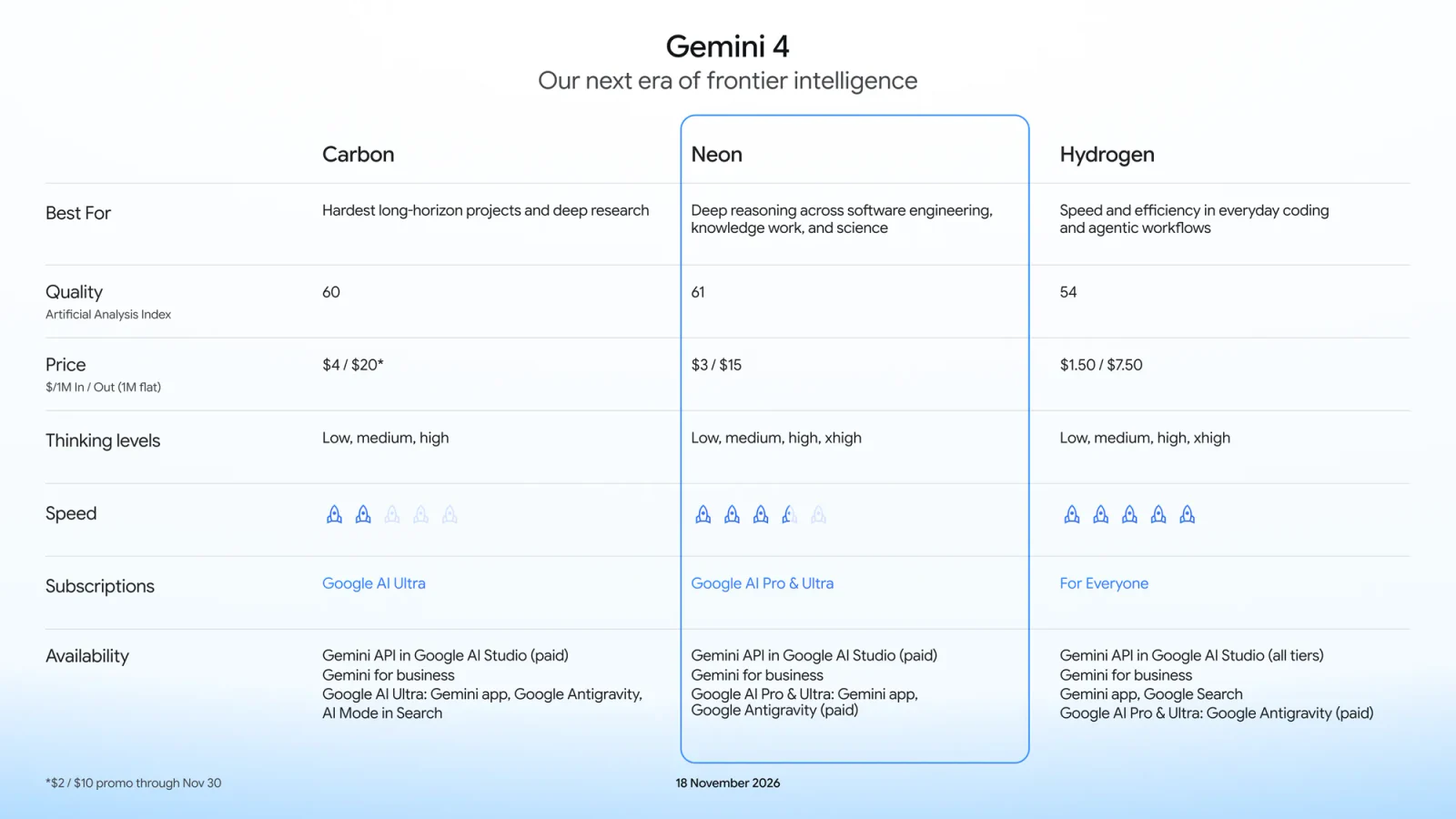
Neon can consider text, images, audio and video in a shared one-million-token context window. A token is a small unit a model processes. The window is its working space for the material you supply, the reasoning it does and the answer it produces. For the spreadsheet investigation, that gives you room to include the workbook and its supporting documents in the same request. In the personal Gemini app, Pro and Ultra subscribers get Neon. Developers can use the paid Gemini API, and Google also brought Neon to Antigravity and Gemini for business. Neon developer guide · Gemini app availability
Which model does Neon replace? Google's API migration table points Gemini 3.1 Pro Preview users to Gemini 4 Neon, with Carbon as the alternative for the hardest problems. It points Gemini 3.8 Flash users to Gemini 4 Hydrogen, released on November 12. These are recommended moves for developers deciding what to adopt. The older Gemini 4 Argon still has its own API entry and serves advanced jobs where faster answers and fewer reasoning tokens matter. On a personal account, free Gemini chats can reach Hydrogen through automatic selection. Pro adds Neon, and Ultra also offers Carbon. Google's upgrade paths · Argon developer guide · TechDecode's Hydrogen guide
Which models are on roughly the same tier?
A useful peer is the model you'd try for the same job on another platform. In this comparison, the middle rows overlap. OpenAI gives Terra a particular emphasis on screen and document work, while Google gives Neon a particular emphasis on completing complex work quickly. A model can suit two adjacent jobs, and the order in which you'd try them depends on what you need. OpenAI's Terra guide · Google's model selection guide
| What you need | OpenAI | Anthropic | |
|---|---|---|---|
| Deep investigation, difficult design or science | GPT-6.2 Astra | Gemini 4 Carbon | Claude Fable 5.2 |
| Complex coding or analysis with several steps | GPT-6.2 Sol | Gemini 4 Neon | Claude Opus 5.5 |
| Responsive everyday work on documents and code | GPT-6.1 Terra for visual work, Sol for coding | Gemini 4 Hydrogen | Claude Sonnet 5.5 |
| High-volume extraction, labels and routing | GPT-6 Luna | Gemini 3.5 Flash-Lite | Claude Haiku 5.5 |
Is Gemini 3.8 Flash Google's version of GPT-6 Luna? Both emphasise speed, which makes the comparison tempting. Look at the work each vendor assigns them. Google designed 3.8 Flash for jobs as involved as long-running software projects and recommends Hydrogen as its upgrade. For jobs such as extracting a few fields from thousands of short messages, Google points to 3.5 Flash-Lite. That's the closer match for Luna. Anthropic similarly positions Haiku for high-volume work and Opus as its starting point for substantial coding and knowledge work. Gemini 3.8 Flash model card · Google's selection guide · Anthropic's model guide
What those choices cost in an app of your own
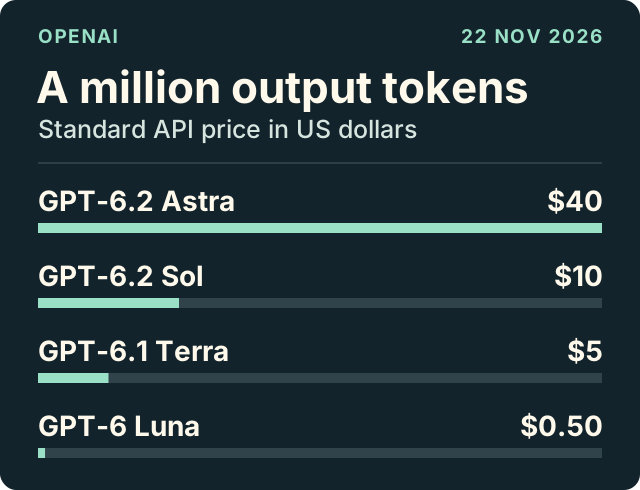
API prices are what a developer pays to send work to a model. As of November 22, OpenAI's standard short-context rates in US dollars per million tokens, input / output, were $8 / $40 for Astra, $2 / $10 for Sol, $1 / $5 for Terra and $0.10 / $0.50 for Luna. On Google's standard paid tier, Hydrogen was $1.50 / $7.50 and Neon $3 / $15. Carbon and Argon had an introductory $2 / $10 rate through November 30, with $4 / $20 listed from December 1. A consumer subscription has its own access rules and usage limits. OpenAI pricing · Google pricing
For scale, consider one request with 10,000 uncached input tokens and 2,000 billable output tokens, including any billed reasoning. At those rates the model charge would be 4 US cents on Sol, 6 cents on Neon and 16 cents on Astra, before any paid tools. Carbon would also be 4 cents at its November price for those exact token counts. Actual answers can use different amounts of reasoning and output. A deep investigation that runs longer can change the order on the final bill.
Genie 4, GPT-Live-1.1 and OpenAI's image classifier
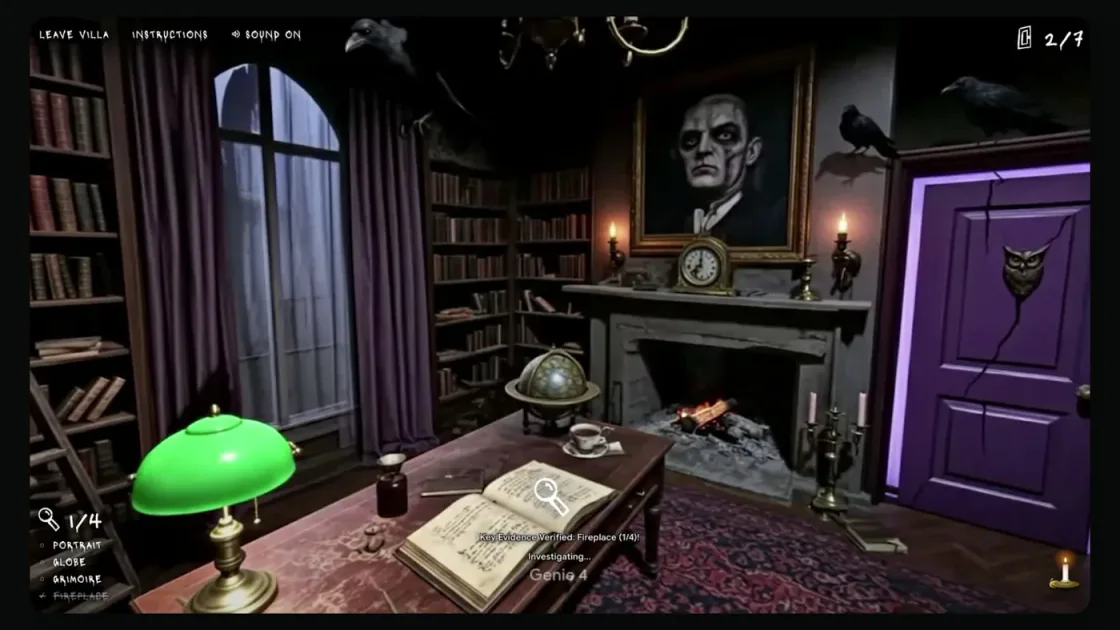
Genie 4 belongs to Google's world-generation family. Give it a scene, move through it, then change the weather or bring in a character while it generates the next sights and sounds. Google first showed it to trusted testers on October 27. Eligible Google AI Ultra subscribers gained access to Genie 4 in Project Genie on November 18. Google released the model through AI Studio and the paid Gemini API on November 19. Its predecessor, Genie 3, remains selectable for longer sessions and worlds seeded from panoramic images. October research preview · Project Genie rollout · Developer release
OpenAI's GPT-Live-1.1 followed GPT-Live-1 in the Live API on November 19. It's for applications where people and the assistant speak to each other in real time. The changes address details a caller hears immediately, including pronunciation and how consistently the voice maintains an accent when the conversation switches languages. OpenAI also reports more accurate transcription. GPT-Live-1.1 model details · OpenAI API release dates
On November 16, OpenAI released its CSAM Image Classifier at no cost to vetted organisations. It flags possible child sexual abuse material, including material that may be AI-generated, so trained human reviewers can prioritise images for inspection. This is a new, access-controlled moderation tool. OpenAI's announcement names no direct predecessor. OpenAI's classifier announcement
What Anthropic shipped, and when Fable and Mythos launched
Claude Fable 5.2 and Claude Mythos 5.2 launched on November 9, succeeding the respective 5.1 versions. They share an underlying model and sit above Opus 5.5 for demanding technical work. Fable is the broadly available version. Mythos requires verification for approved research uses. Anthropic recorded no new Claude model launch during November 16–22. Anthropic's launch announcement · Claude Platform release notes
The most visible Claude release that week came on November 20. Team and Enterprise customers began getting computer use in beta, allowing Claude to work in desktop apps a user permits. A refreshed mobile interface also started rolling out on iOS 26 and later. Earlier in the week, Anthropic extended text watermarking to four older models on November 16, then added linked billing for third-party apps and a choice of Stable or Latest updates for Claude Desktop on November 17. Claude app release notes · Claude Platform changelog